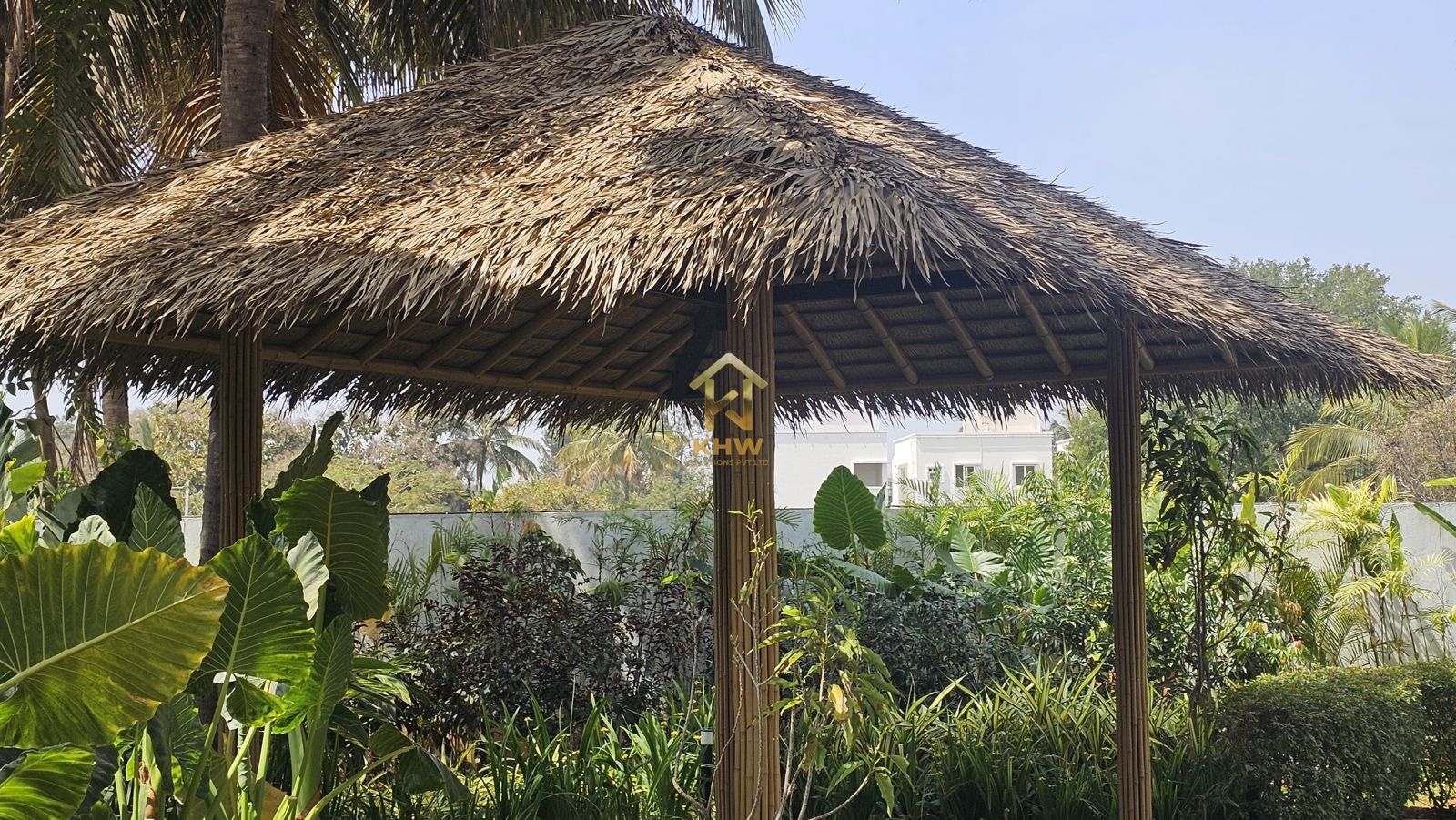
A boathouse has something that an ordinary building cannot easily recreate. The water outside, the changing light, the open views, and the connection with nature all contribute to the experience. But the interior also plays an important role. A well-designed boathouse should feel comfortable and inviting while still reflecting the character of its waterfront location.
This is one reason bamboo has remained popular in boathouse and waterfront interiors. Its natural texture brings warmth into a space and works particularly well with timber, stone, rope, thatch, and other natural-looking materials.
However, modern boathouse projects are not always looking for traditional materials alone. Resorts, houseboat operators, floating restaurants, and waterfront property developers also need to consider maintenance, consistency, durability, and the practical requirements of a commercial space.
Artificial bamboo mats offer an interesting way to bring the familiar appearance of bamboo into these interiors. They can be used across ceilings, walls, partitions, feature areas, guest cabins, restaurants, reception spaces, and lounges.
The result can be a boathouse that feels natural and traditional while still supporting a modern interior design approach.
Why Bamboo Works So Well in Boathouse Interiors
Waterfront architecture has always borrowed from nature.
Wooden structures, woven textures, natural colours, stone, plants, and bamboo all help create a relaxed atmosphere. Bamboo is particularly effective because its texture adds visual interest without making a room feel heavy.
Artificial bamboo mats can provide the same design direction in a manufactured format.
They can help designers achieve:
- A warm and natural interior
- Consistent bamboo-inspired texture
- A strong connection with the waterfront setting
- Flexible applications across different rooms
- Easier coordination between different design elements
- A balance between traditional and contemporary styles
The material does not need to cover every surface. In many modern interiors, using it selectively creates a more sophisticated result.
1. Create a Statement Bamboo Ceiling
The ceiling is often overlooked when designing a boathouse.
Because many waterfront interiors already have large windows and open views, the ceiling can become an important surface for adding warmth and texture.
Artificial bamboo mats can be used across the complete ceiling or installed between exposed beams.
For a traditional-style boathouse, bamboo mats can be combined with timber beams and warm pendant lights.
For a contemporary property, the same material can be paired with recessed lighting, clean furniture, glass, and minimalist architectural details.
A bamboo ceiling can become the visual element that ties the entire room together.
2. Use Bamboo Mats for Feature Walls
A feature wall is one of the easiest ways to introduce artificial bamboo into a boathouse.
Instead of covering every wall, select one prominent surface and make it the focal point.
This could be:
- Behind a reception counter
- Behind a bed
- Behind a restaurant bar
- Behind lounge seating
- Along a dining area
- Inside a guest cabin
A bamboo feature wall can also be combined with a logo, artwork, signage, or lighting.
This makes it particularly useful for commercial properties where interior design also contributes to brand identity.
3. Transform Guest Cabins with Bamboo Texture
Guest cabins on houseboats and floating resorts often have limited space.
Large decorative elements can make a small room feel crowded, so designers need to use materials carefully.
Artificial bamboo mats can be used as a headboard wall or ceiling feature rather than covering the entire room.
Combine the bamboo texture with:
- Simple wooden furniture
- Neutral fabrics
- Warm lighting
- Natural colours
- Minimal decoration
This creates a comfortable environment without making the cabin feel overly rustic.
4. Design Relaxed Waterfront Lounge Areas
A lounge overlooking the water should feel comfortable and relaxed.
Artificial bamboo mats can be used on selected walls or ceilings to give the space more character.
A bamboo privacy screen can also divide the lounge into smaller seating zones.
This allows several groups of guests to enjoy some privacy while still maintaining a visual connection with the surrounding water.
Soft lighting and comfortable furniture can make the bamboo texture particularly effective during the evening.
5. Add Privacy with Bamboo Screens
Open layouts are common in waterfront architecture, but completely open spaces do not always provide enough privacy.
Artificial bamboo mats can be incorporated into framed screens to divide different areas.
They can be used between:
- Restaurant tables
- Lounge seating
- Guest areas
- Reception and waiting spaces
- Outdoor decks
- Private dining areas
Unlike a solid wall, a bamboo-inspired screen can provide separation without making the room feel closed.
This makes it particularly useful for resorts and floating restaurants.
6. Give Restaurant Interiors a Distinct Identity
The atmosphere of a waterfront restaurant is part of the dining experience.
Guests notice the views, furniture, lighting, ceiling, walls, and decorative details as soon as they enter.
Artificial bamboo mats can help create a restaurant interior that feels connected to the location.
They can be used as:
- Ceiling panels
- Feature walls
- Bar backdrops
- Decorative partitions
- Dining screens
- Decorative column coverings
- Private dining sections
For a tropical concept, bamboo mats can be combined with synthetic thatch, timber, greenery, and warm lighting.
For a modern concept, bamboo can be paired with stone, glass, black or metallic details, and contemporary furniture.
7. Create a Bamboo-Inspired Reception Area
The reception is the first major interior space many guests see.
For a resort or commercial boathouse, it is an opportunity to establish the property’s visual identity immediately.
A bamboo feature wall behind the reception desk can create a strong first impression.
The design could include:
- Artificial bamboo mats
- Timber framing
- Backlit signage
- Natural stone
- Decorative plants
- Warm architectural lighting
The combination can feel premium without losing the natural character expected from a waterfront property.
8. Use Bamboo as a Room Divider
A large open room does not always need permanent walls.
Artificial bamboo mats can be incorporated into lightweight framed partitions to create separate zones.
For example, a large floating restaurant could use bamboo partitions to separate the main dining area from a private dining section.
Similarly, a resort lounge could use screens to create smaller seating areas.
This approach offers greater flexibility than building permanent walls and allows the interior to maintain a more open character.
9. Create a Premium Spa and Wellness Atmosphere
Many waterfront resorts incorporate spa, massage, or wellness facilities.
These spaces are generally designed around relaxation, privacy, and natural materials.
Artificial bamboo mats can complement this concept particularly well.
They can be used for:
- Treatment-room partitions
- Feature walls
- Reception backdrops
- Relaxation lounges
- Privacy screens
- Ceiling features
Combined with soft lighting, neutral colours, timber, stone, and natural fabrics, bamboo-inspired surfaces can create a calm and comfortable environment.
10. Add Character to Corridors and Walkways
Not every part of a boathouse needs a dramatic design feature.
Long corridors, connecting walkways, and transitional areas can sometimes feel plain.
Artificial bamboo mats can be used selectively to introduce texture along these spaces.
For example, a bamboo screen could be placed at the end of a corridor as a visual focal point. A feature section could also be used between guest cabins to create a consistent design language throughout the property.
Combining Artificial Bamboo with Other Materials
One of the biggest advantages of artificial bamboo mats is that they do not need to be used alone.
The best interiors often combine several materials.
| Material | Design Effect |
| Timber | Creates warmth and a traditional waterfront character |
| Stone | Adds contrast and a more premium feel |
| Synthetic thatch | Supports a tropical or resort-inspired appearance |
| Rope | Reinforces a nautical or coastal theme |
| Glass | Keeps the space visually connected to the water |
| Metal | Adds a modern architectural contrast |
| Natural fabrics | Creates a softer and more relaxed atmosphere |
This allows artificial bamboo mats to work in both traditional and modern interiors.
Artificial Bamboo and Modern Lighting
Lighting can completely change the appearance of bamboo-inspired surfaces.
During the day, natural light can highlight the texture of the material. At night, carefully positioned artificial lighting can create depth and shadows.
Warm lighting is particularly effective for hospitality interiors.
Pendant lights can be suspended below a bamboo ceiling. Wall lights can highlight a feature wall. Hidden LED lighting can be incorporated behind a decorative panel.
The key is to use lighting to highlight the texture rather than simply illuminating the entire surface evenly.
Using Bamboo Mats in Small Spaces
Artificial bamboo mats can also be useful in compact boathouses.
When floor space is limited, vertical surfaces and ceilings become important design opportunities.
Instead of filling the room with furniture or decorative objects, a bamboo feature wall can provide enough visual interest on its own.
This can make a small cabin or lounge feel more thoughtfully designed without adding unnecessary elements.
Artificial Bamboo Mats for Luxury Boathouse Interiors
Luxury does not always mean using expensive materials everywhere.
Often, it comes from how materials are combined.
Artificial bamboo mats can become part of a more premium interior when paired with carefully selected furniture, quality lighting, stone, glass, timber, and refined finishes.
A luxury houseboat, for example, could use bamboo mats on the ceiling, natural stone around the bathroom, timber furniture, soft upholstery, and large glass openings overlooking the water.
The bamboo provides warmth while the other materials keep the interior sophisticated.
Maintenance and Practical Considerations
Interior design is only one part of choosing a material for a boathouse.
Waterfront environments can be humid, and commercial properties may experience frequent guest use.
Artificial bamboo mats can offer a manufactured alternative to natural bamboo and may reduce some maintenance requirements in suitable applications. However, they still need routine cleaning and inspection.
Property owners should consider:
- Dust and dirt accumulation
- Humidity levels
- Water exposure
- Ventilation
- Cleaning methods
- Fixing systems
- Product suitability for the intended location
The manufacturer’s recommendations should always be followed, particularly for areas exposed to moisture or sunlight.
Designing a Consistent Theme Across the Property
One of the most effective ways to use artificial bamboo mats is to repeat the material throughout different parts of the property.
It does not mean using the same installation everywhere.
Instead, the same bamboo-inspired material can appear in different ways.
For example:
Reception: Feature wall.
Restaurant: Ceiling and dining partitions.
Guest Cabins: Headboard or ceiling.
Lounge: Privacy screen.
Outdoor Deck: Decorative screening.
This creates a visual connection between different spaces and gives the property a stronger identity.
Artificial Bamboo Mats for Modern Waterfront Architecture
The idea of a boathouse has changed considerably.
Modern waterfront properties are no longer restricted to traditional construction styles. They can be minimalist, luxurious, tropical, contemporary, or a combination of several influences.
Artificial bamboo mats fit into this changing landscape because they retain the visual character associated with traditional bamboo while allowing designers to use the material in new ways.
They can become a background texture, a feature surface, a privacy element, or an important part of the property’s overall design theme.
Final Thoughts
Transforming a boathouse interior does not always require major structural changes. Sometimes, changing the materials used on ceilings, walls, partitions, and feature areas can completely change how a space feels.
Artificial bamboo mats offer designers a versatile way to introduce warmth, texture, and a natural-inspired appearance into modern waterfront interiors.
They can be used for ceilings, feature walls, guest cabins, restaurant interiors, reception areas, privacy screens, lounges, spas, and outdoor seating spaces. When combined with timber, stone, synthetic thatch, glass, rope, and modern lighting, they can support a wide range of design styles.
For resorts, houseboats, floating restaurants, and private boathouses, artificial bamboo mats provide an opportunity to retain the familiar visual appeal of bamboo while considering the practical demands of contemporary design and maintenance.
KHW Solutions Pvt. Ltd. offers artificial bamboo solutions for hospitality, resort, commercial, and architectural applications, including artificial bamboo mats, panels, poles, and strips. These products can be incorporated into a variety of interior and suitable exterior applications to create distinctive waterfront environments.
Whether the goal is a traditional boathouse atmosphere, a modern floating restaurant, or a luxury waterfront resort, artificial bamboo mats can provide the texture and visual character needed to bring the design together.