Bamboo has been part of waterfront architecture for generations. Its natural texture, warm appearance, and connection with nature make it a popular choice for boathouses, houseboats, resorts, restaurants, and other structures built around water.
But choosing bamboo for a waterfront project is not simply a matter of appearance.
A boathouse can be exposed to humidity, moisture, sunlight, rain, insects, dirt, and changing weather conditions. For commercial properties, there is another consideration: maintenance. A material that looks attractive when installed also needs to remain practical as the property is used year after year.
This is where the comparison between artificial bamboo mats and natural bamboo mats becomes important.
Artificial bamboo mats are manufactured to provide a bamboo-inspired appearance, while natural bamboo mats are made from actual bamboo. Both have their advantages, and neither option is automatically right for every project.
For boathouses and waterfront properties, the better choice depends on the location, intended application, maintenance expectations, design requirements, and product specifications.
Natural Bamboo Mats: The Traditional Choice
Natural bamboo has a long history in architecture and interior design.
It is particularly common in regions where bamboo is readily available and has traditionally been used for ceilings, walls, screens, partitions, roofing elements, furniture, and decorative applications.
One of its biggest advantages is authenticity.
Natural bamboo has variations in colour, texture, pattern, and finish that come directly from the material itself. These variations can give a boathouse a handcrafted and organic appearance.
For a traditional waterfront property, this character can be very desirable.
However, natural bamboo is an organic material, which means it needs to be selected, treated, installed, and maintained appropriately for the environment.
Why Waterfront Conditions Matter
A boathouse is exposed to a very different environment from a conventional indoor building.
Even when bamboo mats are installed under a roof, the surrounding atmosphere may remain humid. Outdoor decks, balconies, restaurants, and floating structures may also experience rain, water splashes, strong sunlight, and changing temperatures.
These conditions can affect natural materials over time.
The main factors to consider include:
- Humidity
- Moisture exposure
- Rain
- Direct sunlight
- UV exposure
- Insects
- Mould and biological growth
- Dirt and dust
- Repeated wet and dry conditions
This does not mean natural bamboo cannot be used in these environments. It simply means that proper material selection and maintenance become more important.
What Are Artificial Bamboo Mats?
Artificial bamboo mats are manufactured materials designed to reproduce the appearance and texture associated with bamboo.
They can be used in many of the same visual applications as natural bamboo mats, including:
- Ceiling coverings
- Wall features
- Decorative panels
- Privacy screens
- Room dividers
- Restaurant interiors
- Reception areas
- Guest cabins
- Covered outdoor spaces
The main difference is that artificial bamboo mats are not dependent on natural bamboo as the finished material.
This can provide greater consistency in appearance and dimensions, which can be useful for commercial projects where multiple areas need to follow the same design concept.
Artificial Bamboo Mats vs Natural Bamboo Mats: At a Glance
The comparison becomes easier when the main considerations are looked at together.
| Consideration | Artificial Bamboo Mats vs Natural Bamboo Mats |
| Appearance | Artificial mats provide a consistent bamboo-inspired appearance, while natural bamboo offers genuine organic variation |
| Moisture | Artificial options may offer more consistent performance in suitable moisture-prone applications; natural bamboo requires appropriate protection |
| Humidity | Artificial materials can reduce some concerns associated with prolonged exposure of organic bamboo |
| Maintenance | Artificial mats can be easier to maintain in suitable applications, while natural bamboo may require more regular treatment |
| Insects | Artificial materials can reduce concerns associated with pests that affect organic bamboo |
| Consistency | Artificial mats generally provide a more uniform appearance across large installations |
| Design | Both can create warm, natural-looking interiors and exteriors |
| Commercial use | Artificial mats can be attractive where consistent appearance and manageable maintenance are priorities |
| Authenticity | Natural bamboo provides genuine organic character |
| Cost | Initial and long-term costs depend on product, installation, location, maintenance, and project size |
There is no universal winner. The right option depends on what the property needs.
Maintenance: One of the Biggest Differences
Maintenance is often the deciding factor for commercial boathouses.
Natural bamboo can require appropriate treatment to help protect it from environmental conditions. Depending on the location and product, periodic inspection, cleaning, refinishing, or protective treatment may be required.
For a small private boathouse, this may not be a major issue.
For a resort with several guest cabins, restaurants, lounges, decks, and common areas, it can become a larger operational responsibility.
Artificial bamboo mats can provide a more consistent manufactured surface and may reduce some of these maintenance requirements in suitable applications.
They still need cleaning and inspection, particularly in waterfront environments.
Dust, dirt, moisture deposits, and other contaminants can accumulate on any surface.
Durability in a Waterfront Environment
Durability is another important consideration.
Natural bamboo can perform well when the correct species, treatment, construction, and maintenance practices are used. However, its performance can vary depending on environmental exposure.
Artificial bamboo mats are manufactured with a focus on consistency, but their performance also depends on the specific material and intended application.
For example, an artificial bamboo mat designed for an indoor ceiling should not automatically be used on an exposed balcony.
Before installation, property owners should check whether the product is suitable for:
- Indoor use
- Semi-outdoor use
- Outdoor use
- High-humidity areas
- Direct sunlight
- Rain exposure
- Coastal or salt-air environments
The product specification should always match the actual site conditions.
What About Water Resistance?
This is an important point when comparing the two materials.
Natural bamboo is not inherently waterproof. It can absorb moisture and therefore requires suitable treatment and protection depending on the application.
Artificial bamboo mats may provide better resistance to moisture in certain applications, but synthetic does not automatically mean waterproof.
A product designed for interior decorative use should not be assumed to withstand continuous direct water exposure.
For a boathouse, the installation location matters just as much as the material.
A ceiling inside a fully enclosed cabin has very different requirements from a privacy screen installed on an exposed waterfront deck.
Insects and Organic Material
Natural bamboo is an organic material, which means insects and pests can be a consideration.
Proper treatment can help protect natural bamboo, but ongoing inspection may still be required depending on the location.
Artificial bamboo mats do not have the same organic composition as natural bamboo. This can reduce some pest-related concerns associated with untreated natural materials.
For commercial hospitality properties, this can be useful because large installations can be difficult and time-consuming to inspect regularly.
Mould, Algae, and Humidity
Waterfront environments can create conditions where mould and algae become concerns.
Natural bamboo can be affected when it remains damp for extended periods, particularly in poorly ventilated areas.
Artificial bamboo mats may reduce some of the concerns associated with organic materials, but they are not completely immune to surface contamination.
A synthetic surface can still collect dirt, moisture, and biological growth if it is exposed to suitable conditions.
Good ventilation, proper installation, regular cleaning, and preventing trapped moisture remain important regardless of the material selected.
Appearance: Which One Looks Better?
This is where personal preference and project style become important.
Natural bamboo offers genuine organic variation.
Each installation can have slight differences, and this can create a handcrafted appearance that works beautifully in traditional resorts and rustic boathouses.
Artificial bamboo mats focus more on consistency.
For a modern hospitality project, this can actually be an advantage. Designers can create a more controlled visual appearance across multiple rooms and buildings.
Artificial bamboo does not necessarily need to look completely modern either. It can be used to recreate a traditional bamboo-inspired interior while providing a more uniform finish.
Cost: Looking Beyond the Initial Price
Cost comparisons between artificial and natural bamboo should not be based only on the purchase price of the material.
The total project cost can include:
- Material
- Transportation
- Installation
- Surface preparation
- Protective treatment
- Cleaning
- Periodic maintenance
- Repairs
- Replacement
- Labour
Natural bamboo may have an attractive initial price in some markets, particularly where bamboo is locally available.
However, additional treatment and maintenance may influence the long-term cost.
Artificial bamboo mats may have a different initial cost but can be attractive when consistency and reduced routine maintenance are important.
The actual cost will depend heavily on the product, project size, installation method, location, and expected service conditions.
Which Is Better for a Commercial Boathouse?
For commercial properties, the decision often comes down to how the material will be used.
A small traditional guesthouse may prefer natural bamboo because authenticity is central to its design.
A large waterfront resort with dozens of guest areas may prefer artificial bamboo mats because consistency and maintenance are more important.
A floating restaurant may use artificial bamboo for its ceiling and partitions while using natural timber and stone elsewhere.
A luxury houseboat could use artificial bamboo as a feature material rather than covering the entire interior.
There is also no rule that says a project must use only one material.
Combining Natural and Artificial Materials
In some projects, the best solution may be to combine different materials.
Natural timber can be used for structural or furniture elements, while artificial bamboo mats are used for ceilings or decorative walls.
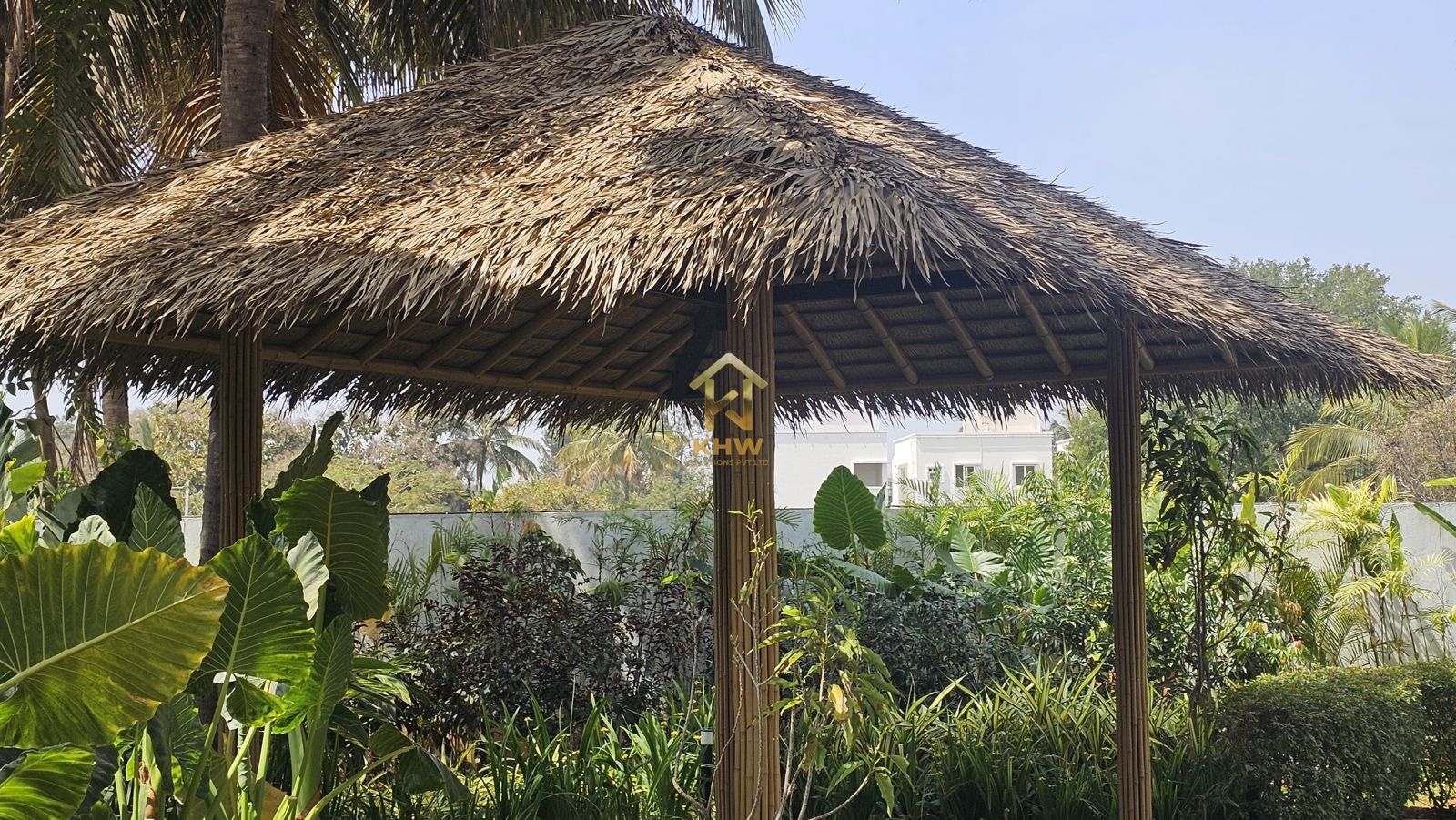
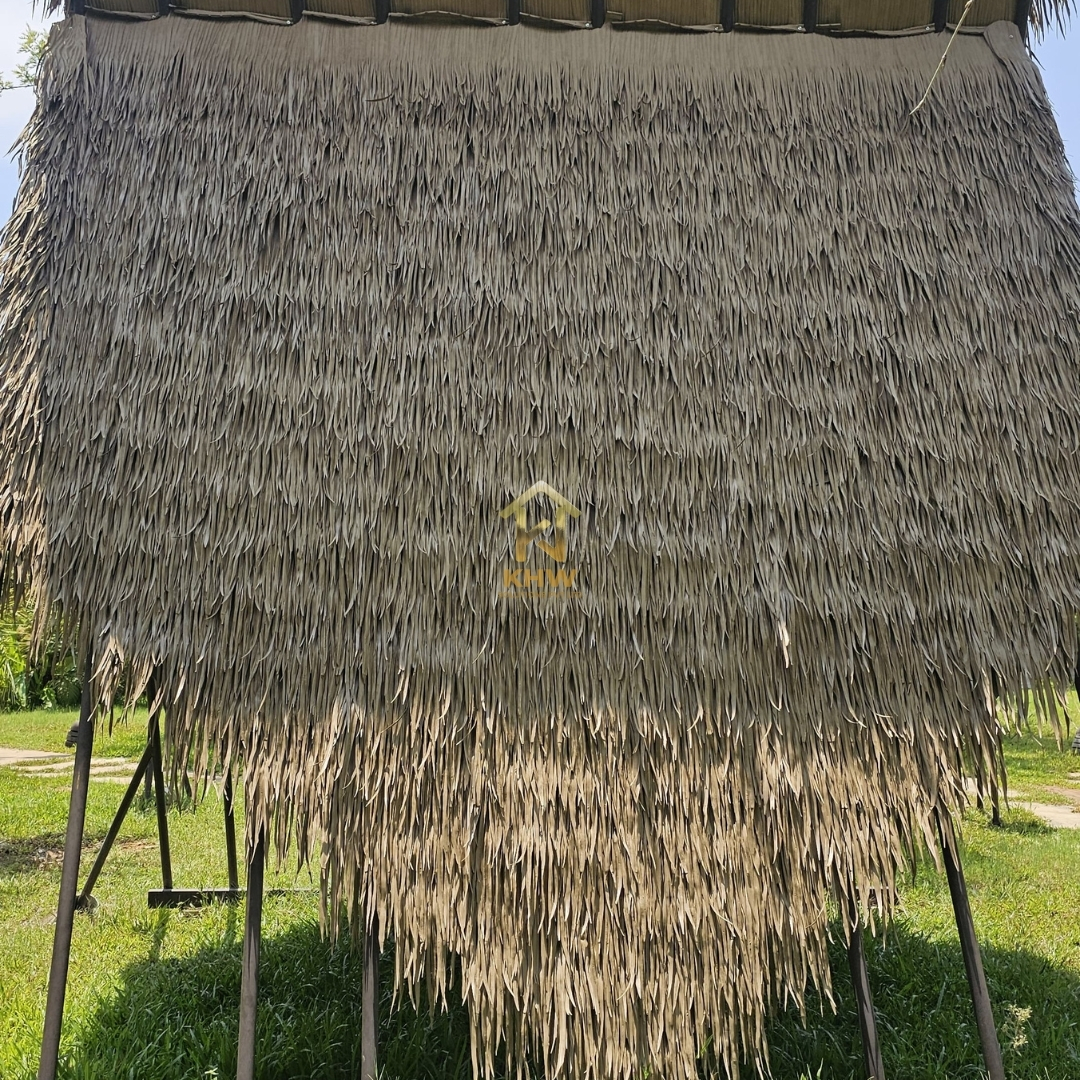
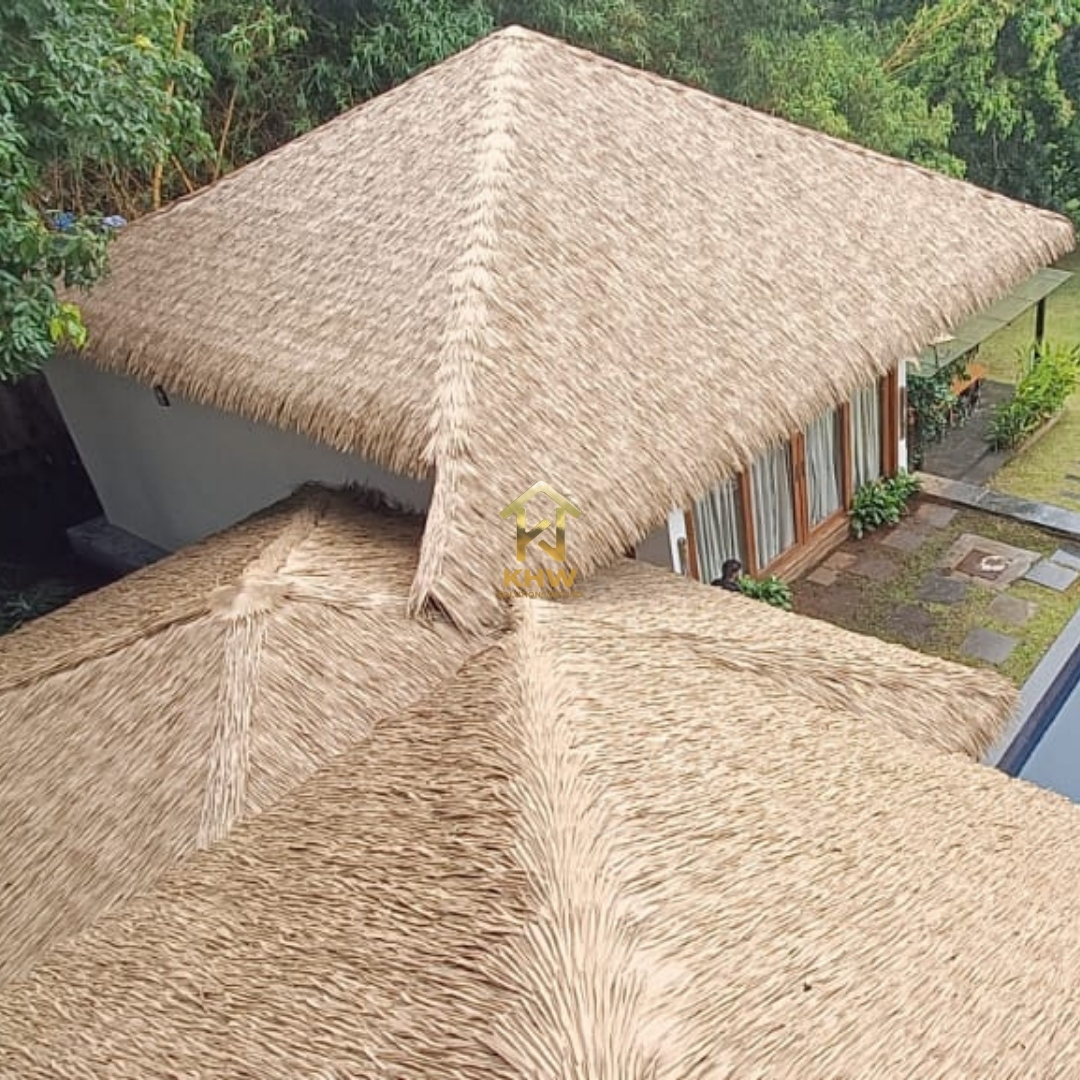
Synthetic thatch can be used on the roof, while artificial bamboo creates the interior texture.
Stone can be introduced around reception areas or flooring, while bamboo-inspired panels create warmth.
This allows designers to choose each material according to its purpose rather than trying to make one material work everywhere.
Artificial Bamboo Mats for Large Hospitality Projects
Large commercial projects often benefit from material consistency.
Imagine a resort with 30 guest cabins, two restaurants, a reception building, multiple lounges, and several outdoor seating areas.
If artificial bamboo mats are used as part of the design concept, the same visual language can be repeated across the property.
This creates a stronger brand identity.
The material can appear in different forms:
- Ceiling sections in guest cabins
- Feature walls in restaurants
- Screens around outdoor seating
- Reception backdrops
- Decorative panels in lounges
- Partitions between dining areas
This level of consistency can be more difficult to achieve with natural materials that vary from batch to batch.
Choosing the Right Option for Different Applications
The ideal material can change depending on where it is being installed.
| Application | Material Consideration |
| Indoor guest cabin | Both natural and artificial bamboo can work depending on the desired appearance and maintenance plan |
| Restaurant ceiling | Artificial bamboo can provide a consistent finish across larger areas |
| Feature wall | Both options can work; natural bamboo suits organic designs while artificial mats offer consistency |
| Privacy screen | Artificial mats can be useful where repeatable appearance and manageable maintenance are priorities |
| Covered outdoor area | Product suitability for humidity and environmental exposure should be checked carefully |
| Exposed balcony | Use only a product specifically suitable for the expected outdoor conditions |
| Traditional boathouse | Natural bamboo may be preferred for authentic organic character |
| Commercial resort | Artificial bamboo can be attractive where consistency and maintenance are major considerations |
How to Decide Between Artificial and Natural Bamboo Mats
Before making a decision, consider the following questions:
1. What is the environment like?
A dry indoor boathouse has different requirements from a coastal floating restaurant.
2. How much maintenance can the property handle?
If regular treatment and maintenance are difficult to manage, a manufactured alternative may be worth considering.
3. How important is natural variation?
If authenticity and organic variation are central to the design, natural bamboo may have an advantage.
4. Does the project require consistency?
For multiple rooms or buildings, artificial bamboo can provide a more uniform appearance.
5. What is the expected lifespan and replacement plan?
Look beyond the initial purchase price and consider maintenance and replacement over the intended service period.
6. What does the manufacturer recommend?
Always check product specifications before using a material in a particular environment.
The Better Question Is Not “Which Is Better?”
It is tempting to ask whether artificial bamboo or natural bamboo is better.
For boathouse projects, the more useful question is:
Which material is better suited to this particular application?
Natural bamboo may be the right choice when authenticity, local character, and traditional craftsmanship are priorities.
Artificial bamboo mats may be a better fit where consistency, maintenance, environmental exposure, and repeatable design are more important.
Both materials have a place in waterfront architecture.
Final Thoughts
The choice between artificial bamboo mats and natural bamboo mats for boathouses is not simply a decision about appearance. Moisture, humidity, sunlight, insects, maintenance, installation, durability, and long-term costs all need to be considered.
Natural bamboo continues to offer a genuine organic character that works beautifully in traditional waterfront architecture. Artificial bamboo mats, on the other hand, provide a manufactured alternative that can offer consistency and potentially easier routine maintenance in suitable applications.
For commercial resorts, floating restaurants, houseboats, and large waterfront properties, these practical considerations can become especially important.
The best approach is to evaluate the actual environment and application before selecting the material. In some projects, natural bamboo may be the ideal choice. In others, artificial bamboo mats may provide a more practical balance between appearance and everyday usability. In many cases, the two can even be used together.
KHW Solutions Pvt. Ltd. offers artificial bamboo solutions for hospitality, resort, commercial, and architectural applications, including artificial bamboo mats, panels, poles, and strips. These products can be considered for boathouses, houseboats, floating restaurants, resorts, and other waterfront projects where bamboo-inspired aesthetics and practical material considerations need to work together.
For property owners, architects, and interior designers planning a waterfront project, comparing the material based on the complete lifecycle—not just the initial appearance or purchase price—can lead to a more suitable long-term choice.