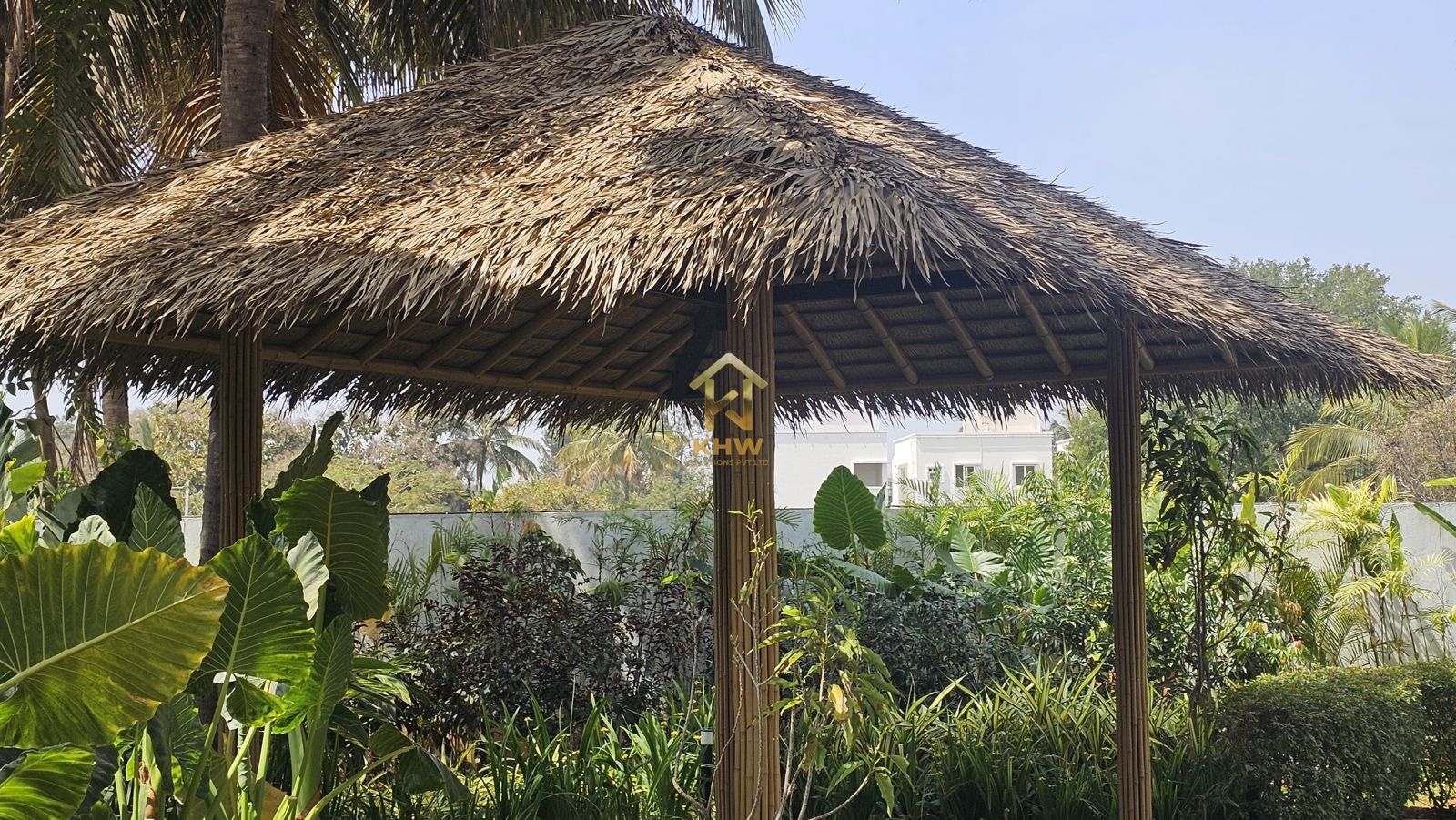
A boathouse should feel connected to the water.
Whether it sits beside a lake, floats on a backwater, overlooks a river, or forms part of a coastal resort, its architecture is often most successful when it works with the surrounding landscape rather than competing with it.
This is why natural-inspired materials have always been popular in waterfront design. Bamboo, timber, stone, rope, woven textures, and thatch can create a relaxed atmosphere that feels appropriate for the setting.
But modern boathouse design is changing. Today’s waterfront properties are expected to offer more than a traditional appearance. Resorts, houseboats, restaurants, and hospitality developments also need to consider maintenance, consistency, durability, guest comfort, and long-term usability.
This has created interest in materials such as artificial bamboo mats and synthetic thatch, which can help designers recreate the visual character of traditional waterfront architecture while working with modern design requirements.
Used together, these two materials can create a strong natural-inspired design language for boathouses, floating restaurants, houseboats, resorts, and other waterfront structures.
What Is an Eco-Inspired Boathouse?
Eco-inspired architecture does not necessarily mean that every material used in a building must be natural.
The idea is more about creating a visual and environmental connection with nature through materials, colours, textures, landscaping, lighting, and the way the building interacts with its surroundings.
An eco-inspired boathouse might include:
- Bamboo-inspired ceilings
- Thatch-style roofing
- Timber furniture
- Natural stone
- Open views of the water
- Green landscaping
- Warm lighting
- Natural colours
- Outdoor seating
- Open and well-ventilated spaces
Artificial bamboo mats and synthetic thatch can contribute to this visual approach while giving designers alternatives to natural materials.
Why Combine Artificial Bamboo Mats with Synthetic Thatch?
Artificial bamboo mats and synthetic thatch serve different purposes, but they complement each other extremely well.
Synthetic thatch can create the traditional roof appearance associated with tropical and waterfront architecture.
Artificial bamboo mats can carry the same design language into the interior.
For example, a boathouse might have a synthetic thatch roof on the outside and an artificial bamboo ceiling underneath.
The result is a more complete design rather than having the roof and interior feel like two separate styles.
This combination can be particularly effective for:
- Waterfront resorts
- Houseboats
- Floating restaurants
- Lakeside retreats
- Backwater properties
- Coastal hospitality projects
- Poolside structures
- Tropical-style restaurants
Creating a Natural-Inspired Roof
The roof is one of the first elements people notice when approaching a boathouse.
A synthetic thatch roof can give the structure a traditional tropical appearance while allowing the architecture underneath to remain modern.
Different roof shapes can create different visual effects.
A steeply pitched roof can create a dramatic resort-style appearance.
A gently sloping roof can feel more contemporary.
A curved or layered roof can create a distinctive architectural feature.
Synthetic thatch can be selected according to the desired visual style and project requirements.
As with any roofing material, the complete roof system, structural support, waterproofing, drainage, and local building requirements need to be considered during installation.
Bringing the Same Character Indoors with Artificial Bamboo Mats
Once guests enter the boathouse, the interior should continue the visual story established by the roof.
This is where artificial bamboo mats can become useful.
They can be installed on:
- Ceilings
- Feature walls
- Partitions
- Reception backdrops
- Restaurant interiors
- Guest cabins
- Lounge areas
- Privacy screens
A bamboo-inspired ceiling beneath a synthetic thatch roof can create a strong sense of continuity.
The materials do not have to be identical. They simply need to complement each other.
Artificial Bamboo Ceilings Under Synthetic Thatch
One of the most effective combinations is a synthetic thatch roof with an artificial bamboo ceiling.
The roof provides the external tropical character while the bamboo ceiling adds warmth inside.
This works particularly well in open-plan restaurants and lounges.
Timber beams can be left exposed, with bamboo mats installed between them.
Warm pendant lights can hang below the ceiling, creating a comfortable evening atmosphere.
For a more contemporary design, bamboo mats can be combined with clean structural lines and modern lighting.
Creating a Resort-Style Restaurant
Restaurants are one of the strongest applications for this combination.
A waterfront restaurant should feel different from an ordinary urban dining space.
Guests should immediately feel that they are somewhere connected to nature and water.
A restaurant with synthetic thatch roofing, artificial bamboo ceiling sections, timber furniture, natural stone, warm lighting, and open views can create this atmosphere.
Artificial bamboo mats can also be used for:
- Dining partitions
- Bar backdrops
- Feature walls
- Decorative columns
- Private dining areas
- Reception counters
The result can be natural and relaxed without looking outdated.
Designing Guest Cabins and Houseboats
The same design concept can continue into guest accommodation.
A houseboat cabin or waterfront guest room can use artificial bamboo mats selectively rather than covering every surface.
For example:
Ceiling: Artificial bamboo mat finish.
Walls: Neutral or timber-inspired surfaces.
Bed: Simple upholstered or wooden furniture.
Lighting: Warm indirect lighting.
Windows: Large openings overlooking the water.
This creates a comfortable interior while keeping the focus on the surrounding environment.
A bamboo feature wall behind the bed can also act as a decorative headboard.
Privacy Screens That Still Feel Open
Waterfront properties often need privacy without sacrificing views.
Artificial bamboo mats can be incorporated into framed screens around:
- Outdoor seating
- Restaurant tables
- Guest balconies
- Lounge areas
- Spa spaces
- Private dining areas
These screens can create a sense of separation while maintaining the natural character of the property.
For a resort, this can be particularly useful around premium seating areas where guests expect more privacy.
Using Artificial Bamboo Mats on Outdoor Decks
Outdoor decks are often the heart of a waterfront property.
They allow guests to sit close to the water and enjoy the surroundings.
Artificial bamboo mats can be used for selected applications such as privacy screens, decorative walls, covered ceilings, or visual dividers.
However, outdoor applications require careful product selection.
The selected material should be appropriate for the expected levels of sunlight, UV exposure, rain, humidity, and water contact.
A product intended only for indoor decorative use should not automatically be installed outdoors.
Combining Bamboo, Thatch, Timber, and Stone
A successful eco-inspired design rarely depends on one material.
Instead, several materials work together.
| Material | Role in the Design |
| Artificial bamboo mats | Adds texture, warmth, partitions, ceilings, and feature surfaces |
| Synthetic thatch | Creates a traditional or tropical roof appearance |
| Timber | Adds natural warmth and structural character |
| Stone | Provides contrast and a grounded, premium appearance |
| Rope | Reinforces a nautical or coastal theme |
| Glass | Maintains visual connection with the water |
| Natural fabrics | Softens the interior and adds comfort |
The combination allows designers to create depth.
Too much of one material can make a space feel repetitive. Mixing textures usually creates a more refined result.
A Modern Interpretation of Traditional Architecture
Eco-inspired design does not have to look old-fashioned.
Artificial bamboo mats and synthetic thatch can be used in very contemporary architecture.
Imagine a floating restaurant with clean structural lines, large glass panels, modern furniture, and minimalist lighting. A synthetic thatch roof could soften the exterior while artificial bamboo mats introduce warmth inside.
The result would not be a traditional boathouse copied from the past.
It would be a modern interpretation of waterfront architecture using familiar natural-inspired textures.
This approach is becoming increasingly relevant to hospitality projects that want to feel distinctive without becoming overly rustic.
Maintenance and Long-Term Practicality
One reason synthetic materials are being considered for hospitality projects is maintenance.
Natural bamboo and natural thatch can require appropriate treatment and ongoing care, particularly in humid and moisture-prone environments.
Artificial bamboo mats and synthetic thatch can provide manufactured alternatives that may reduce some routine maintenance requirements in suitable applications.
However, neither material should be treated as completely maintenance-free.
A waterfront property should still have a regular maintenance program.
This can include:
- Cleaning surfaces
- Checking fixing points
- Inspecting exposed areas
- Removing accumulated dirt
- Maintaining ventilation
- Checking for trapped moisture
- Inspecting roofing and drainage systems
- Following manufacturer maintenance recommendations
The actual maintenance requirements depend on the selected products and installation conditions.
Considering the Environmental Side
The term “eco-inspired” should not automatically be interpreted as “environmentally superior.”
Artificial materials are manufactured products, so their environmental impact depends on factors such as production, material composition, transportation, service life, maintenance, and eventual disposal.
The benefit of using artificial bamboo and synthetic thatch is primarily the ability to achieve a natural-inspired architectural appearance with manufactured materials that may provide consistent performance and reduced maintenance in appropriate applications.
For projects with specific sustainability goals, developers should review the environmental information and certifications available for the products being considered.
This is a more responsible approach than assuming that every synthetic material is automatically a sustainable material.
Designing for Different Waterfront Locations
The same design concept can work across different types of waterfront properties, but the environmental conditions will vary.
Lakeside Boathouses
Lakeside properties can use bamboo-inspired interiors, synthetic thatch roofs, timber decks, and landscaped surroundings to create a relaxed retreat.
Backwater Resorts
Backwater properties can combine traditional-looking roofs and bamboo-inspired interiors with open-air restaurants, houseboats, and guest cabins.
Riverfront Properties
Riverfront restaurants and resorts can use artificial bamboo screens and ceilings to create a natural atmosphere while maintaining modern architecture.
Coastal Resorts
Coastal properties need greater consideration of sunlight, humidity, salt air, wind, and rain. Products should be selected specifically for their intended exposure.
Designing a Complete Guest Experience
The strongest hospitality environments are designed as complete experiences.
Guests should feel the connection with the waterfront from the moment they arrive.
A synthetic thatch entrance can establish the theme.
A bamboo-inspired reception can continue it.
A bamboo ceiling can carry it into the restaurant.
Privacy screens can continue the same texture into outdoor areas.
Guest cabins can use bamboo feature walls.
Outdoor seating can combine timber, bamboo-inspired screening, and landscaping.
This creates a consistent visual journey throughout the property.
Practical Considerations Before Installation
Before specifying artificial bamboo mats or synthetic thatch for a boathouse, designers and property owners should consider:
- Location and climate
- Indoor or outdoor application
- Humidity and moisture exposure
- Direct sunlight and UV exposure
- Rain and water contact
- Coastal or salt-air conditions
- Structural requirements
- Installation method
- Ventilation
- Cleaning and maintenance
- Local building and fire-safety requirements
- Product specifications and warranties
Fire-retardant products, where available, should not be confused with fireproof materials. Any project with specific fire-safety requirements should be assessed according to applicable local regulations and professional guidance.
Why This Combination Works for Hospitality Projects
For hospitality businesses, the design needs to do more than look attractive.
It needs to create a memorable environment while remaining practical for everyday operation.
Artificial bamboo mats and synthetic thatch can support this goal by providing a consistent natural-inspired appearance across different parts of a property.
They can also be combined with modern architectural materials, allowing the designer to control how traditional or contemporary the final result feels.
A simple lakeside retreat can use them to create a rustic atmosphere.
A luxury resort can use them as refined decorative elements.
A floating restaurant can use them to establish a strong brand identity.
The same materials can support very different design concepts.
Final Thoughts
Designing an eco-inspired boathouse is not about copying traditional architecture exactly. It is about understanding what makes waterfront spaces attractive and bringing those qualities into a modern setting.
Artificial bamboo mats and synthetic thatch can play an important role in that process.
Synthetic thatch can create the familiar appearance of a traditional waterfront roof, while artificial bamboo mats can bring warmth and texture into ceilings, walls, guest cabins, restaurants, reception areas, partitions, and outdoor spaces.
When combined with timber, stone, rope, glass, natural fabrics, landscaping, and thoughtful lighting, these materials can create a complete waterfront environment that feels connected to nature while supporting modern hospitality requirements.
The key is to select each material according to the actual application. Indoor ceilings, covered outdoor spaces, exposed decks, coastal properties, and roofing systems all have different requirements.
KHW Solutions Pvt. Ltd. offers solutions for modern hospitality and architectural projects, including artificial bamboo mats, panels, poles, strips, and synthetic thatch roofing products. These materials can be used across resorts, boathouses, houseboats, floating restaurants, villas, and other waterfront developments.
For architects, interior designers, resort developers, and property owners looking to combine traditional waterfront character with contemporary design, artificial bamboo and synthetic thatch provide a flexible starting point for creating distinctive, natural-inspired spaces.